- 31b Great Western Road Dorchester Dorset DT1 1UF
- quotes@myhomesolar.uk

Call Us
0800 193 3933
Businesses across Dorset and the South Coast are facing growing pressure to reduce carbon emissions, improve sustainability credentials, and protect themselves from increasingly unpredictable energy costs. At the same time, the United Kingdom’s legally binding commitment to reach net zero carbon emissions by 2050 has encouraged organisations of every size to reconsider how they generate and consume energy.
Commercial solar panels have emerged as one of the most practical and financially sensible solutions available. Once viewed as a specialist technology reserved for large corporations, commercial solar energy is now helping warehouses, farms, schools, manufacturing facilities, offices, and retail premises reduce their environmental impact whilst improving long term financial resilience.
For many organisations, investing in commercial solar panels is no longer simply a sustainability initiative. It is becoming a strategic business decision that supports operational efficiency, energy independence, and long term growth.
Commercial solar panels support net zero goals in the UK by generating clean renewable electricity that reduces reliance on fossil fuels, lowers carbon emissions, and helps businesses meet sustainability targets. They also reduce energy costs, strengthen ESG performance, and provide a practical pathway towards long term environmental responsibility.
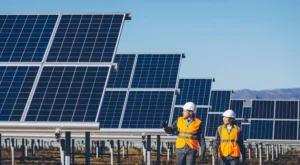
Net zero refers to achieving a balance between the greenhouse gases produced and those removed from the atmosphere. The United Kingdom has committed to reaching net zero emissions by 2050, making it the first major economy to establish such a target in law.
Whilst governments play a central role in shaping environmental policy, businesses are increasingly expected to contribute towards national carbon reduction objectives. Commercial organisations account for a significant proportion of the country’s energy consumption, meaning meaningful progress towards net zero depends heavily on changes within the private sector.
Investors, consumers, employees, and supply chain partners are also becoming more environmentally conscious. Organisations that demonstrate a genuine commitment to sustainability often enjoy stronger reputations, greater customer trust, and improved competitiveness.
For businesses across Dorset and the South Coast, the challenge is finding practical ways to reduce emissions without compromising productivity or profitability. This is precisely where commercial solar panels can make a substantial difference.
Electricity generated from fossil fuels remains one of the largest contributors to carbon emissions across the United Kingdom. By installing solar panels on commercial premises, businesses can generate their own renewable electricity directly from sunlight.
Unlike conventional energy generation, solar power produces no direct carbon emissions during operation. Every kilowatt hour generated by a solar installation reduces the need for electricity produced by carbon intensive sources.
The impact can be significant.
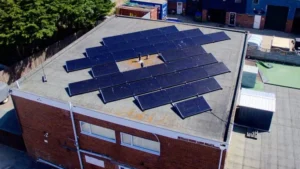
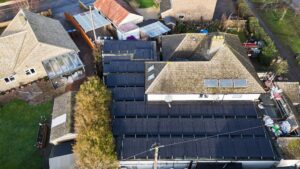
Large commercial roofs often provide extensive unused space capable of supporting substantial solar arrays. Warehouses, agricultural buildings, schools, distribution centres, and manufacturing facilities frequently possess ideal roof structures for commercial solar installation.
Over time, these systems can offset many tonnes of carbon emissions, helping organisations reduce their environmental footprint whilst maintaining normal business operations.
What makes solar particularly attractive is that emission reductions begin immediately after installation. Unlike some carbon reduction strategies that require behavioural change or operational restructuring, commercial solar systems start generating renewable electricity from the moment they become operational.

One of the greatest challenges facing the UK energy sector is reducing reliance on fossil fuels whilst maintaining energy security.
Commercial solar energy directly addresses this challenge by decentralising electricity generation. Instead of relying entirely on electricity supplied through the national grid, businesses can generate a substantial proportion of their own power on site.
This transition supports wider national decarbonisation efforts whilst providing individual businesses with greater control over energy consumption.
Many Dorset businesses are already recognising the value of producing electricity locally. Whether operating a coastal hospitality venue, an agricultural enterprise, or a manufacturing facility, generating renewable energy on site reduces exposure to market volatility and contributes to a cleaner energy system.
The benefits extend beyond individual organisations. As more businesses adopt commercial solar power, the collective reduction in carbon emissions helps accelerate progress towards national sustainability objectives.
Whilst environmental considerations are often a key motivation, financial performance remains a major factor for business decision makers.
Energy costs have become one of the most significant operational expenses facing organisations across the United Kingdom. Volatile wholesale energy markets have created uncertainty, making long term budgeting increasingly difficult.
Commercial solar panels provide a degree of protection against this volatility.
By generating electricity on site, businesses can reduce the amount of energy purchased from external suppliers. This translates directly into lower energy bills and more predictable operating costs.
For organisations with high daytime electricity consumption, the financial benefits can be particularly compelling. Many businesses consume the majority of their energy during daylight hours, aligning perfectly with solar generation patterns.
Over time, these savings can contribute towards a strong return on investment.
Additionally, commercial properties equipped with renewable energy systems may become more attractive to tenants, investors, and future purchasers. As sustainability considerations become increasingly important within the property sector, renewable energy infrastructure can enhance overall asset value.
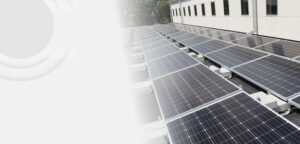
Environmental, Social and Governance reporting has become increasingly important across numerous industries.
Large corporations are often required to demonstrate progress towards sustainability targets, whilst smaller businesses are finding that clients and procurement frameworks increasingly favour environmentally responsible suppliers.
Commercial solar panels support ESG objectives in several important ways.
Businesses that invest in commercial solar installation frequently find that renewable energy projects become a visible demonstration of their commitment to environmental responsibility.
This can enhance brand reputation and support customer retention in increasingly competitive markets.
For organisations throughout Dorset and the South Coast, sustainability is becoming more than a marketing message. It is evolving into a measurable business priority with genuine commercial value.
The South Coast possesses many characteristics that make it particularly well suited to commercial solar adoption.
Agricultural buildings throughout Dorset often feature large roof spaces capable of accommodating extensive solar arrays. Farms can use solar energy to power equipment, storage facilities, irrigation systems, and processing operations.
Warehouses and distribution centres similarly benefit from expansive roof areas that can generate substantial amounts of renewable electricity.
Manufacturing facilities frequently experience high energy demand throughout working hours, making solar generation especially valuable.
Schools, colleges, and public sector buildings are also increasingly embracing renewable energy as they seek to reduce operating costs and demonstrate environmental leadership.
Even retail premises and office buildings can achieve meaningful savings through well designed commercial solar installations.
Businesses throughout Bournemouth, Poole, Christchurch, Dorchester, Weymouth, and the wider Dorset region are increasingly exploring how renewable energy can support both financial and environmental objectives.
My Home Solar has helped organisations across the South Coast understand how tailored commercial solar solutions can align with their unique energy requirements, operational demands, and sustainability ambitions.