- 31b Great Western Road Dorchester Dorset DT1 1UF
- quotes@myhomesolar.uk

Call Us
0800 193 3933
Rising energy costs have forced businesses across Bournemouth and the South Coast to reconsider how their premises operate. What was once viewed as a simple overhead has become a significant strategic concern. Commercial property owners are now searching for ways to reduce long term expenditure whilst simultaneously improving the value and appeal of their buildings.
Commercial solar panels have emerged as one of the most compelling solutions.
Far from being merely an environmental gesture, solar technology is increasingly regarded as a serious commercial investment capable of enhancing profitability, strengthening sustainability credentials, and improving the attractiveness of commercial property assets. As energy efficiency becomes more important to tenants, investors, and buyers alike, buildings equipped with renewable energy systems are often viewed more favourably than those dependent entirely upon traditional grid electricity.
For many businesses throughout Bournemouth and the wider South Coast, the question is no longer whether commercial solar panels are worthwhile. The more pressing question is whether they actively increase business property value.
In many cases, the answer is yes.
Commercial property value is shaped by far more than location alone. Operating costs, energy efficiency, future liabilities, and tenant desirability all contribute to how a building is perceived in the market. Solar panels directly improve several of these factors simultaneously.
One of the most immediate benefits is reduced operational expenditure. A commercial building fitted with a professionally designed solar energy system can generate a substantial proportion of its daily electricity requirements independently. This lowers ongoing utility bills and shields businesses from the volatility of future energy price increases.
For prospective buyers or tenants, lower running costs represent a clear financial advantage. A building that already incorporates renewable energy infrastructure is often seen as more commercially viable and better prepared for the future.
Energy efficiency ratings also play a vital role. Commercial properties with stronger EPC ratings are becoming increasingly desirable as environmental regulations tighten throughout the United Kingdom. Buildings with poor efficiency ratings may face future restrictions or require expensive upgrades to remain compliant. Solar panels can significantly improve a building’s energy performance profile, making the property more attractive to investors and occupiers alike.
There is also a reputational element involved. Modern businesses are under increasing pressure to demonstrate environmental responsibility. Companies that operate from sustainable premises are often viewed more positively by customers, investors, and commercial partners.
A commercial building equipped with solar technology therefore carries both practical and symbolic value.
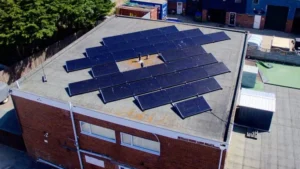
The financial argument for commercial solar installation is stronger today than at any previous point.
Electricity prices throughout the United Kingdom have risen considerably in recent years, placing enormous pressure upon businesses across virtually every sector. Hospitality venues, warehouses, manufacturing facilities, office buildings, and retail premises have all experienced substantial increases in operating costs.
Commercial solar panels allow businesses to regain a degree of control.
By generating electricity onsite, companies can dramatically reduce dependence upon expensive grid supplied power. Many commercial systems achieve meaningful savings from the very first month of operation, particularly when paired with intelligent battery storage technology.
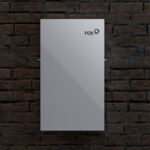
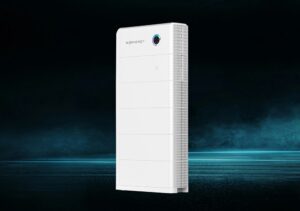
Battery systems such as Tesla batteries, Fox ESS batteries, Enphase batteries, SolarEdge batteries, and SigEnergy batteries allow businesses to store unused electricity generated during daylight hours. This stored energy can then be used during peak demand periods when electricity prices are highest.
For commercial properties operating long business hours, the savings can become extremely significant.
Over time, these lower operational costs contribute directly to improved property desirability and value.
A buyer assessing two otherwise similar commercial premises may naturally favour the building capable of delivering lower energy expenditure over the coming decade.

Tenant expectations have evolved considerably in recent years. Businesses are becoming more conscious of sustainability, operational efficiency, and long term financial stability when selecting commercial premises.
Buildings equipped with renewable energy systems are increasingly viewed as premium assets.
A tenant occupying a solar powered commercial property benefits from reduced electricity costs, stronger sustainability credentials, and protection against energy market fluctuations. For larger organisations with ESG targets or environmental reporting requirements, these advantages can be especially important.
This is particularly relevant throughout Bournemouth and the South Coast, where many businesses actively market themselves as environmentally responsible enterprises. Commercial landlords who invest in solar infrastructure may therefore find it easier to attract high quality tenants and secure longer tenancy agreements.
In competitive commercial property markets, these advantages matter greatly.
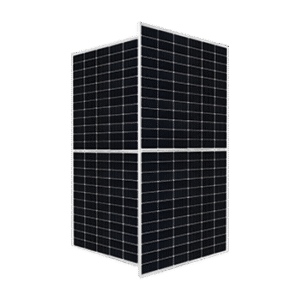
Not all commercial solar systems are equal. The quality of both the installation and the products used can significantly influence performance, longevity, and ultimately property value.
Premium solar panel manufacturers such as JA Solar, Aiko Solar, and Trina Solar have become increasingly popular amongst commercial property owners seeking reliable long term performance.
These panels are engineered to provide exceptional efficiency and durability, helping businesses maximise energy generation whilst maintaining attractive aesthetics across rooftops and commercial premises.
Battery storage technology has also transformed the commercial solar sector. Advanced systems from Tesla, Fox ESS, SolarEdge, Enphase, and SigEnergy enable businesses to optimise how and when electricity is used.
This intelligent energy management capability is particularly valuable for companies operating during peak tariff periods.
A professionally designed solar and battery system therefore represents not merely an energy solution, but a sophisticated commercial asset.
Across Bournemouth and the South Coast, commercial solar adoption has accelerated rapidly.
Businesses are increasingly aware that energy efficiency now influences customer perception, operational resilience, and property desirability. Rising electricity costs have only strengthened this trend.
Warehouses, hospitality venues, office buildings, industrial premises, agricultural facilities, and retail units throughout the region are now investing in commercial solar installations at unprecedented levels.
There are several reasons for this shift.
The South Coast receives strong annual sunlight levels compared with many other parts of the country, making solar generation especially viable. Commercial properties often possess large roof spaces ideal for solar deployment. At the same time, local businesses are eager to reduce operating costs whilst demonstrating environmental responsibility.
Commercial property owners who fail to modernise may eventually find themselves competing against more energy efficient buildings offering substantially lower operational expenses.
Commercial property owners must increasingly consider the future regulatory and financial landscape.
Environmental legislation is tightening. Energy costs remain uncertain. Sustainability expectations continue to grow.
Buildings dependent entirely upon conventional electricity infrastructure may become progressively less attractive over time.
Commercial solar panels provide a practical means of future proofing a property against these evolving pressures. By improving energy efficiency and reducing carbon emissions, solar equipped buildings are often better positioned to meet future standards without requiring costly retrofitting works later.
This long term resilience contributes meaningfully to overall property desirability.
Forward thinking investors recognise that sustainability is no longer optional. It is rapidly becoming a core component of commercial asset quality.
Some business owners still assume that commercial solar systems are prohibitively expensive or difficult to maintain. In reality, the sector has evolved considerably.
Modern commercial solar installations are remarkably reliable and require relatively little ongoing maintenance when installed correctly.
High quality panels from manufacturers such as JA Solar, Aiko Solar, and Trina Solar are designed for decades of performance. Many systems continue operating efficiently for twenty five years or longer.
Battery technology has also advanced rapidly, making energy storage more efficient and commercially practical than ever before.
Another misconception is that solar panels negatively affect building appearance. Contemporary commercial systems are typically sleek, discreet, and professionally integrated into the building design.
In many cases, they actively enhance the perception of a modern and environmentally conscious commercial premises.
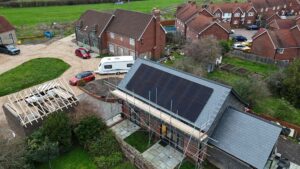
For many businesses throughout Bournemouth and the South Coast, commercial solar installation represents a highly attractive investment.
The benefits extend beyond reduced electricity bills alone.
Commercial solar panels can improve EPC ratings, increase tenant appeal, strengthen sustainability credentials, reduce long term operating costs, and help future proof commercial assets against rising energy prices and evolving regulations.
Taken together, these factors often contribute positively towards overall property value.
Whilst every building and installation differs, well designed commercial solar systems are increasingly viewed as desirable commercial infrastructure rather than optional additions.
As energy efficiency becomes more central to property valuation and tenant expectations, solar equipped commercial buildings are likely to enjoy growing advantages within the market.
Yes. Commercial solar panels can improve energy efficiency, reduce operational costs, and increase tenant appeal, all of which may contribute positively towards commercial property value.
For many businesses, commercial solar panels provide substantial long term savings whilst supporting sustainability goals and reducing dependence upon grid electricity.
Most high quality commercial solar panels are designed to last twenty five years or longer with proper maintenance.
Yes. Commercial solar installations can help improve a building’s energy efficiency rating, making the property more attractive to buyers and tenants.
Battery storage systems can significantly improve energy management by storing excess solar electricity for later use, particularly during peak pricing periods.