- 31b Great Western Road Dorchester Dorset DT1 1UF
- quotes@myhomesolar.uk

Call Us
0800 193 3933
In most cases, you do not need to apply for planning permission to install solar panels on a home in England. Solar panels can usually be installed under permitted development rights, provided the installation satisfies the relevant conditions and limitations. Different requirements can apply to listed buildings, certain properties in conservation areas and installations that fall outside permitted development rules.
Permitted development rights allow certain improvements to be made to a property without submitting a conventional planning application.
Solar panels fitted to houses, blocks of flats and certain buildings within their grounds can fall within these rights. This has made it considerably simpler for homeowners to adopt renewable energy without having to navigate the full planning process.
Permitted development should not, however, be confused with an absence of rules.
The position and design of the panels still matter. Solar equipment should, so far as practicable, be positioned to minimise its effect upon the external appearance of the building and the amenity of the surrounding area.
There are also specific limits governing matters such as the height and projection of panels. If a proposed installation exceeds those limits, planning permission may be necessary.
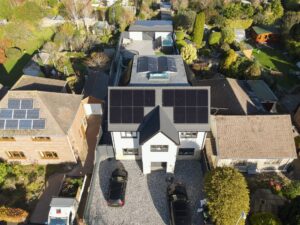
Although most conventional domestic rooftop systems can be installed through permitted development rights, there are circumstances in which further approval may be required.
Planning permission, prior approval or another form of consent may need to be considered when:
This is why planning should be considered in relation to the individual property rather than treated as a simple yes or no question.
For an ordinary residential installation, the answer is usually straightforward. For an architecturally sensitive property or an unconventional solar project, further investigation may be sensible before work begins.
For panels installed on a pitched roof, they should not normally project more than 200 millimetres beyond the roof slope or wall surface. They should also not be installed above the highest part of the roof, excluding the chimney.
Different provisions apply to flat roofs. The highest part of the solar equipment should not generally extend more than 600 millimetres above the highest part of the roof, excluding the chimney.
The visual effect of an installation is also relevant. Equipment should be positioned, so far as practicable, to minimise its effect upon the appearance of the building and surrounding area.
These rules explain why the design stage of a solar installation is important. A well considered system is not simply about fitting as many panels as possible. Orientation, available sunlight, roof construction, visual appearance and the applicable planning requirements all deserve consideration.
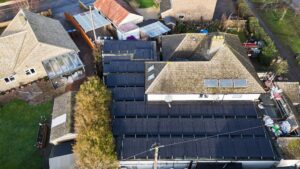
Not necessarily. A modest ground mounted solar installation within the grounds of a house can qualify as permitted development, but the restrictions are different from those governing rooftop panels.
For permitted development rights to apply, only the first standalone solar installation is covered. The installation should not exceed four metres in height and should normally be at least five metres from the property’s boundary.
The array must also remain within the prescribed size limits. It should be no larger than nine square metres, with no dimension exceeding three metres.
Additional restrictions apply to protected locations, including the grounds of listed buildings and scheduled monuments. There are also particular provisions concerning installations in conservation areas.
Consequently, anyone considering a sizeable garden based solar array should establish the planning position before committing to the project.
Living in a conservation area does not automatically prevent you from installing solar panels, nor does it invariably mean that a full planning application will be necessary.
Permitted development rights can apply to unlisted properties within conservation areas, subject to the appropriate conditions.
There are nevertheless additional restrictions designed to protect the architectural and historic character of sensitive locations. For example, panels fitted to a wall that fronts a highway in a conservation area do not benefit from the usual permitted development provisions.
Flat roof installations on certain designated land can also require prior approval from the local planning authority concerning their appearance.
Local restrictions can be important too. An Article 4 Direction can remove particular permitted development rights within a defined area.
This is one reason homeowners with properties in conservation areas should check the precise status of their home rather than assuming that the general rules will necessarily apply.
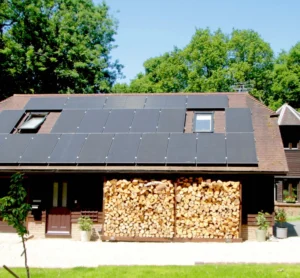
Listed buildings require particular care.
Work affecting the special architectural or historic interest of a listed building can require listed building consent. Planning permission may also be relevant, depending upon the nature and location of the proposed installation.
It is important to appreciate that listed building consent and planning permission are not the same thing.
Planning controls principally concern development and land use, whereas listed building consent exists to protect the special architectural and historic significance of listed structures.
Solar technology and historic architecture are not necessarily incompatible. The important question is whether the installation can be designed and positioned sensitively.
If your home is listed, professional advice and early consultation with the relevant local planning authority are prudent before installation work begins.
Planning permission is only one consideration for people living in flats or leasehold properties.
Even where a solar installation satisfies planning requirements, a leaseholder may need permission from the landlord, freeholder or management company before making alterations to the building.
The roof may form part of the building’s communal structure rather than belonging exclusively to an individual flat. Your lease may also contain restrictions concerning alterations to the exterior.
You should therefore check both the planning position and your legal right to carry out the proposed work.
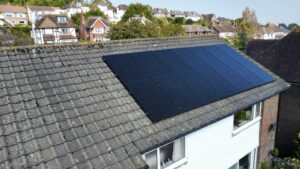
For many homeowners, solar panels are only one part of a modern renewable energy system. Battery storage allows electricity generated during daylight hours to be retained for use later, rather than necessarily being consumed immediately or exported.
Domestic battery installations do not ordinarily present the same planning considerations as large external alterations, although the precise circumstances and location of the equipment should always be considered.
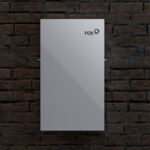
My Home Solar can advise homeowners considering solar panels alongside modern battery technology, including systems such as Tesla Powerwall and Growatt Battery.
The important principle is to consider the complete system from the outset. Solar generation, household consumption, battery capacity and future energy requirements should form part of a coherent design rather than being treated as entirely separate decisions.
Building Regulations are separate from planning permission, and this distinction is frequently misunderstood.
Planning permission is concerned principally with whether development is acceptable from a planning perspective. Building Regulations are concerned with standards including structural and electrical safety.
Roof mounted solar panels will normally be subject to Building Regulations considerations.
Before panels are installed, the existing roof must be capable of carrying the additional load. Its structural capacity should therefore be assessed, and strengthening may occasionally be required.
Electrical installation work must also comply with the appropriate requirements.
Consequently, the fact that your solar panels do not require a planning application does not mean that every other regulatory consideration disappears.
A properly planned installation considers the building, roof, electrical system and solar equipment together.
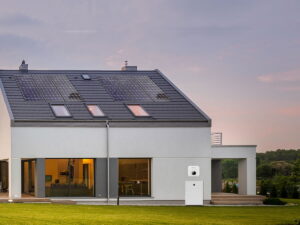
Commercial solar installations can also benefit from permitted development rights in appropriate circumstances, but larger projects require careful consideration of their scale, location, building type and design.
For a business, the financial and environmental case for solar can be substantial, particularly where electricity consumption is high during daylight hours.
My Home Solar can assist businesses considering commercial solar by looking at the wider requirements of the property and proposed system rather than treating the panels in isolation.
Larger or more complex projects should always have their individual planning position established before installation.
One of the most common mistakes is assuming that permitted development means there are no rules. Permitted development is a planning mechanism with its own conditions and limitations.
Another frequent misunderstanding is confusing planning permission with Building Regulations. An installation can fall within permitted development rights while still being subject to Building Regulations requirements.
Owners of older properties may also overlook the significance of listed status, conservation area restrictions or an Article 4 Direction.
Ground mounted panels create another potential source of confusion. The rules are not identical to those governing panels attached to a roof.
Finally, it is unwise to assume that because a neighbour has installed solar panels, precisely the same rules will apply to your home. Property status, location, previous planning conditions and the design of the proposed installation can all affect the position.
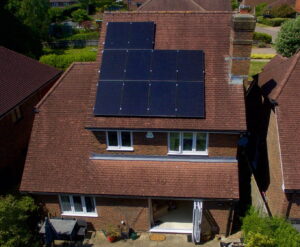
Before arranging an installation, it is sensible to establish a few fundamental facts about your property.
Consider:
If the planning position is uncertain, you can approach your local planning authority for guidance. In some circumstances, homeowners may also choose to obtain a Lawful Development Certificate to provide formal confirmation that proposed works are lawful.
Choosing solar panels involves more than selecting equipment. A successful installation begins with understanding the property, its energy requirements and the practical considerations that influence system design.
My Home Solar helps homeowners explore solar generation and battery storage as part of a considered approach to household energy.
For customers across Dorset, including those looking for solar panels in Bournemouth, Poole, Christchurch and Dorchester, the aim is not simply to install panels, but to help create a system appropriate for the property and the household using it.
Where planning circumstances are unusual, obtaining the correct advice before work begins is always preferable to discovering a difficulty afterwards.
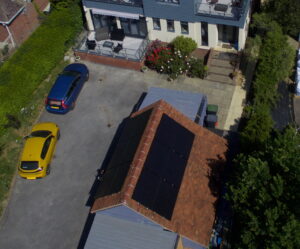
For most homeowners in England, installing solar panels is a relatively straightforward process from a planning perspective. In many cases, rooftop systems fall within permitted development rights, meaning a full planning application is not required. The important point is that permitted development still comes with conditions, particularly in relation to the position, height and appearance of the installation.
Extra care is needed if your property is listed, located in a conservation area, subject to an Article 4 Direction, or if you are considering a ground mounted system. Building Regulations should also be considered separately, as they deal with matters such as structural integrity and electrical safety rather than planning itself.
The best approach is to understand the status of your property before installation begins. That way, you can move forward with confidence and avoid unnecessary complications.
If you are considering solar panels for your home, My Home Solar can help you explore the most suitable system for your property, including solar generation and battery storage, while helping you identify any planning considerations that may need further attention.