- 31b Great Western Road Dorchester Dorset DT1 1UF
- quotes@myhomesolar.uk

Call Us
0800 193 3933
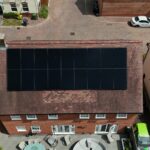
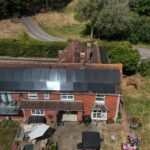
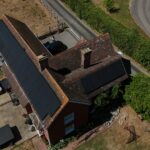
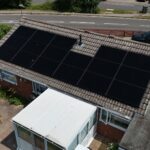
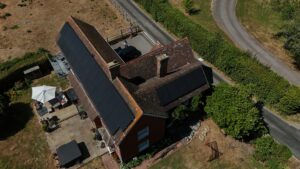
Solar panels can be installed across different roof levels, provided the individual sections meet the necessary installation requirements.
For example, a property may have a main roof, a single storey extension and a garage roof. Depending on their condition and suitability, these areas could accommodate separate groups of solar panels.
However, each roof section may receive different amounts of sunlight throughout the day. Therefore, careful planning is essential to ensure the proposed system makes effective use of the available space.
Professional solar panel installers assess the property before recommending a suitable arrangement. This allows them to consider the positioning of each panel and identify potential installation challenges.
Ultimately, having multiple roof levels does not automatically mean that a property requires a completely different type of solar panel system.
Several factors determine whether a property with multiple roof levels is suitable for solar panels.
The direction and angle of each roof section influence how much sunlight the panels receive.
South facing roofs generally offer favourable conditions for solar electricity generation in the UK. However, east and west facing roofs can also provide suitable installation opportunities.
Where roof sections face different directions, installers must consider how these variations could affect overall system performance.
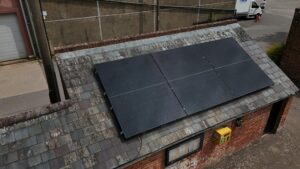
Shading is particularly important when installing solar panels on roofs with different heights.
For example, a higher roof section may cast shadows over panels installed on a lower extension.
These shadows can reduce electricity generation, particularly during certain times of the day or year.
Therefore, a professional shading assessment can help identify the most suitable panel positions and determine whether additional equipment may be beneficial.
Not every roof section will have sufficient space for solar panels.
Features such as chimneys, skylights, roof windows and ventilation outlets can restrict the available installation area.
Installers must also account for appropriate clearances and safe mounting arrangements.
Nevertheless, combining suitable areas across different roof levels may provide more installation space than relying on a single section.
Before installing solar panels, the condition and structural suitability of the roof must be assessed.
Solar panels and their mounting systems introduce additional loads. Consequently, the roof structure must be capable of supporting the proposed installation.
Older roofs or sections showing signs of deterioration may require further investigation before installation proceeds.
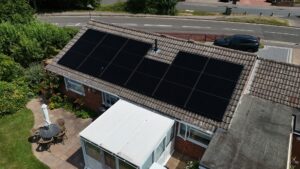
Installing solar panels on a property with multiple roof levels begins with a detailed assessment.
During this process, professional installers examine the available roof sections and identify suitable locations for the panels.
They also consider the property’s electricity requirements, roof access and potential shading.
Once the assessment is complete, a suitable system design can be developed.
Depending on the roof layout, panels may be divided into separate groups connected through an appropriate inverter configuration.
In some circumstances, equipment such as microinverters or power optimisers may help manage differences in shading or panel orientation.
However, these components are not necessary for every installation. The most suitable arrangement depends on the individual property and proposed system.
A carefully designed installation helps ensure that the equipment is appropriate for the roof layout and expected electricity generation.
Solar panels can generate electricity effectively across different roof sections, although their performance will depend on the conditions affecting each area.
For example, panels facing east may generate more electricity during the morning, while west facing panels may produce more during the afternoon.
This variation can sometimes complement a household’s electricity consumption throughout the day.
However, shading, roof pitch and orientation can also influence the total electricity generated.
Therefore, installers must consider how the individual roof sections will work together as part of the overall system.
A professional assessment can help homeowners understand the likely performance of their proposed installation before committing to the project.
Installing solar panels across suitable roof sections can offer several advantages.
Greater use of available roof space: Multiple roof sections may provide additional opportunities for solar panel installation.
Reduced electricity bills: Generating electricity at home can reduce the amount purchased from an energy supplier.
Renewable electricity generation: Solar panels allow homeowners to produce electricity using sunlight.
Potential long term savings: A suitable solar installation may provide financial benefits throughout its operational life.
Greater energy independence: Generating electricity at home can reduce reliance on grid supplied electricity.
However, the benefits will vary depending on the system size, installation conditions and household electricity consumption.
For this reason, obtaining a tailored quotation is an important step when considering solar panels for a complex roof.
Every property has different installation requirements. Therefore, choosing a solar panel system should involve more than simply calculating how many panels will fit on the roof.
At My Home Solar, we understand the importance of considering each property’s individual characteristics.
Whether your home features multiple roof levels, an extension or an unusual roof layout, professional advice can help you understand your installation options.
We provide solar panel installation services throughout Dorset, including Poole, Bournemouth and surrounding areas.
If you are considering solar panels for your property, contact My Home Solar to discuss your requirements and request a free quotation.
Yes, solar panels can often be installed across different roof levels. However, each section must have sufficient space and suitable structural conditions. A professional assessment will help determine the most appropriate installation arrangement.
A complex roof layout may increase installation costs if additional access equipment, mounting arrangements or electrical components are required. However, costs depend on the individual property and system design. A tailored quotation will provide a clearer indication of the expected investment.
Yes, shading from higher roof sections can reduce the electricity generated by panels positioned below. However, careful panel placement and appropriate system design may help minimise its effects.
Contact My Home Solar to discuss your property and installation requirements. Our team can help you explore suitable options and request a free quotation based on your individual circumstances.