- 31b Great Western Road Dorchester Dorset DT1 1UF
- quotes@myhomesolar.uk

Call Us
0800 193 3933
As electricity prices continue to rise and homeowners look for greater energy independence, the question of solar panel efficiency has become increasingly important. Whilst solar technology has advanced considerably over the past decade, not all panels are created equal. Some are designed to maximise output from limited roof space, whilst others prioritise affordability over absolute performance.
Among the names generating significant attention in the solar industry is Aiko Solar. Once known primarily as a cell manufacturer supplying technology to other brands, Aiko has rapidly established itself as one of the most innovative solar companies in the world. Its advanced All Back Contact technology has enabled the company to achieve efficiency levels that, until recently, would have seemed unattainable in mass produced solar modules. Recent Aiko modules have exceeded 25 per cent efficiency in commercial production, placing them at the forefront of modern photovoltaic technology.
The obvious question for homeowners in Dorset and across the United Kingdom is whether Aiko panels are genuinely the most efficient solar panels available and, perhaps more importantly, whether that efficiency translates into meaningful benefits on a domestic roof.
Yes, Aiko Solar Panels are currently among the most efficient solar panels available to homeowners. Their advanced All Back Contact technology allows some models to achieve efficiency ratings exceeding 25 per cent, outperforming many conventional TOPCon and PERC panels. However, the most efficient panel is not always the best choice for every property, as factors such as roof space, cost, warranty and overall system design also influence long term value.

Solar panel efficiency refers to the percentage of sunlight that a solar panel can convert into usable electricity. If a panel receives a certain amount of solar energy and converts 25 per cent of that energy into electricity, it has an efficiency rating of 25 per cent.
At first glance, the difference between a panel rated at 22 per cent and one rated at 25 per cent may appear insignificant. In reality, the impact can be substantial, particularly on properties where roof space is limited.
Imagine two roofs of identical size. The property fitted with higher efficiency panels can generate significantly more electricity from the same available surface area. For households seeking to maximise self consumption or charge an electric vehicle, this additional generation can make a noticeable difference over the lifetime of the system.
Efficiency is particularly important in the United Kingdom, where available daylight hours vary considerably throughout the year. Whilst modern solar panels perform surprisingly well even during overcast weather, extracting the maximum possible energy from available sunlight remains a key objective.
Founded in China, Aiko has become one of the world’s leading photovoltaic technology companies. Unlike many solar brands that simply assemble modules, Aiko has invested heavily in research and development, particularly in solar cell architecture.
The company is best known for its N Type ABC technology. ABC stands for All Back Contact, a design that removes electrical contacts from the front surface of the solar cell and relocates them to the rear. This seemingly simple change delivers two important benefits.
First, more sunlight can reach the active surface of the cell because there are no visible busbars obstructing incoming light. Secondly, electrical losses are reduced, improving overall energy conversion efficiency. Aiko’s ABC architecture has become one of the primary reasons its modules consistently rank among the highest performing products available on the global market.
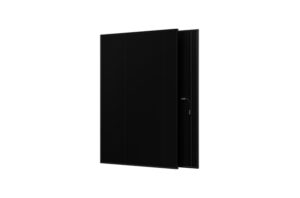
Aiko’s latest residential and commercial modules have achieved efficiency ratings that place them firmly at the top of the market.
Several mainstream Aiko products are currently available with module efficiencies ranging from approximately 23.6 per cent to more than 25 per cent, depending on the model. These figures are significantly higher than the average solar panel installed on UK homes, many of which still operate within the 20 to 22 per cent range.
The company’s success is largely attributable to three innovations:
Traditional panels contain visible electrical conductors on the front of each cell. These conductors block a small amount of sunlight. By moving them to the rear, Aiko maximises light absorption and improves aesthetics.
N Type cells generally degrade more slowly than older P Type designs. This means higher long term energy production and improved performance over decades of operation.
Solar panels become less efficient as temperatures increase. Aiko modules have demonstrated favourable temperature coefficients, helping maintain performance during warmer weather conditions.
The simple answer is no.
A highly efficient panel may produce more electricity from a limited roof area, but efficiency represents only one element of a successful solar installation.
Homeowners should also consider:
A well designed solar system built around quality components will almost always outperform a poorly designed system, regardless of how efficient the panels appear on paper.
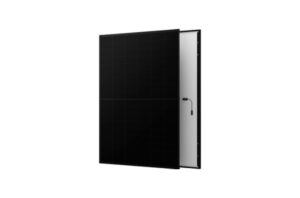
For many homes in Dorchester, Poole, Bournemouth, Christchurch and the wider Dorset region, Aiko panels represent an excellent option where roof space is restricted and homeowners want to maximise generation from every square metre.
However, if a property has a large south facing roof with ample installation space, the financial return from choosing ultra premium panels may be less pronounced. In these circumstances, a slightly lower efficiency panel combined with battery storage may deliver a stronger overall return on investment.
The best solution depends entirely upon the property, energy consumption patterns and long term objectives of the homeowner.
One of the most common mistakes is focusing solely on panel efficiency.
Many homeowners assume the highest efficiency panel automatically represents the best investment. In reality, factors such as system design, roof orientation, shading and battery storage can have a greater impact on annual energy production.
Another frequent mistake is selecting an installer based purely on price. A high quality installation completed by experienced professionals will often generate superior results for decades compared with a cheaper installation using identical equipment.
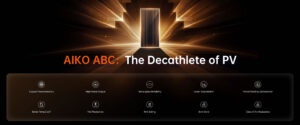
At My Home Solar, we understand that choosing a solar system is a significant investment. Our team works with homeowners and businesses throughout Dorset to design systems tailored to each property’s unique requirements.
Rather than recommending a single manufacturer for every installation, we assess roof space, energy consumption, future demand and budget before advising on the most suitable technology.
Whether that solution involves Aiko, SunPower Maxeon, Panasonic EverVolt or another premium manufacturer, our goal remains the same: delivering long term performance, reliability and value.
Aiko Solar Panels are unquestionably among the most efficient solar panels currently available. Their advanced All Back Contact technology, impressive efficiency ratings and strong long term performance credentials place them at the forefront of modern solar innovation.
Yet efficiency alone should never determine a purchasing decision. The most effective solar installation is one that balances performance, reliability, cost and future energy requirements.
For homeowners in Dorchester and across Dorset, Aiko panels are certainly worthy of consideration, particularly where roof space is limited and every watt counts. However, the best solar panel will always be the one that forms part of a carefully designed system tailored to your property and your goals.
If you are considering solar panels and would like impartial advice on whether Aiko is the right choice for your home, contact My Home Solar today for a free consultation and bespoke quotation.