- 31b Great Western Road Dorchester Dorset DT1 1UF
- quotes@myhomesolar.uk

Call Us
0800 193 3933
As renewable energy becomes more mainstream, one of the biggest questions homeowners and businesses ask is: How many battery units can I actually stack or scale? With solar adoption rising across the UK, the ability to store more clean energy for later use is an attractive feature. Whether you’re considering a Growatt battery vs Tesla Powerwall, a Panasonic EverVolt, or the latest SunPower Maxeon 7 panels paired with storage, the concept of scaling batteries is crucial for energy independence.
In this article, we’ll break down what battery stacking means, the limitations, the benefits, and how different systems compare — all while helping you see why turning to My Home Solar Dorchester could be your smartest next step.
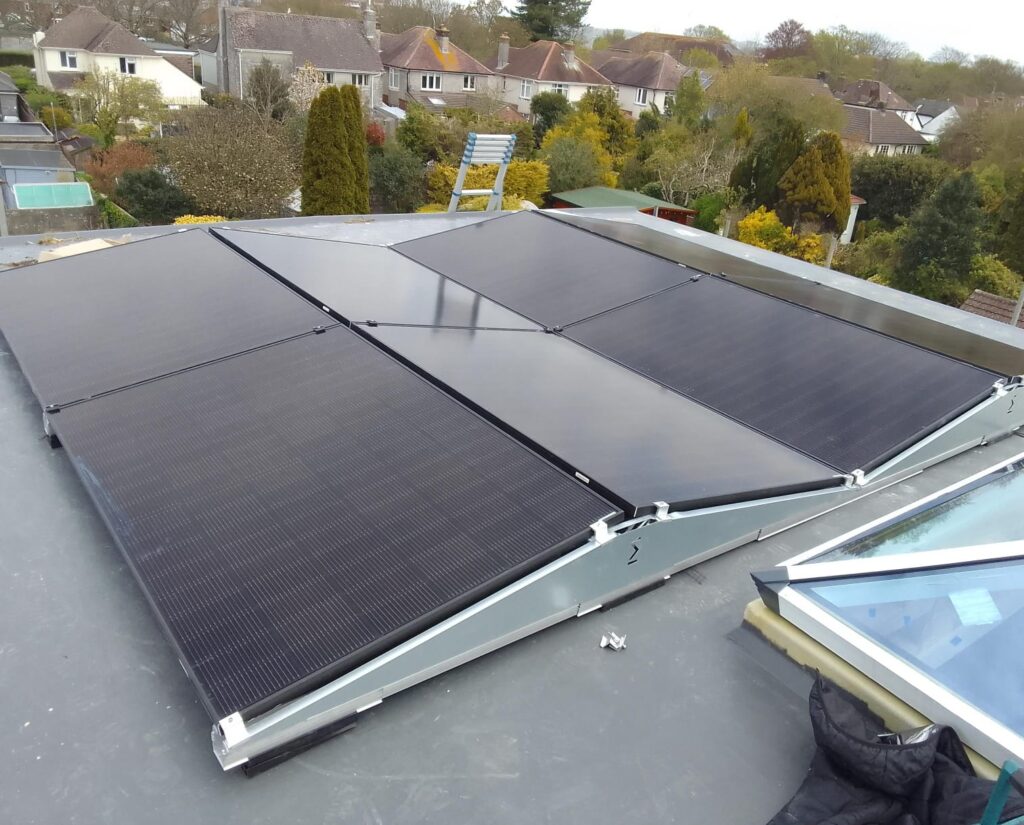
Battery stacking (sometimes called daisy-chaining) refers to connecting multiple battery units together to expand storage capacity. Instead of relying on a single battery to store all your solar energy, you can scale up by adding additional units.
For example, a single residential battery might hold between 5–13.5 kWh of usable capacity. But if your household uses more energy, especially during evenings or cloudy days, one unit won’t cut it. By stacking two, three, or more units, you can store much more energy, ensuring that your home has reliable power.
Scaling is essentially the same principle, but often used in commercial contexts — where businesses add large battery banks to handle high demands and back up critical systems.
When it comes to how many batteries can be stacked, it depends on several factors:
Different brands have different stacking capacities. For instance:
Your inverter is the “brain” of your solar-plus-battery setup. It determines how much energy can be processed at once. If the inverter can’t handle the load from multiple stacked batteries, your system won’t run efficiently.
Battery systems must comply with strict fire safety, ventilation, and installation guidelines. Overloading beyond manufacturer recommendations isn’t just risky — it could void warranties.
A single battery may not take up much room, but once you start stacking, physical space and ventilation requirements become important considerations. Commercial setups may dedicate entire rooms to battery banks, while households typically work with limited garage or utility space.
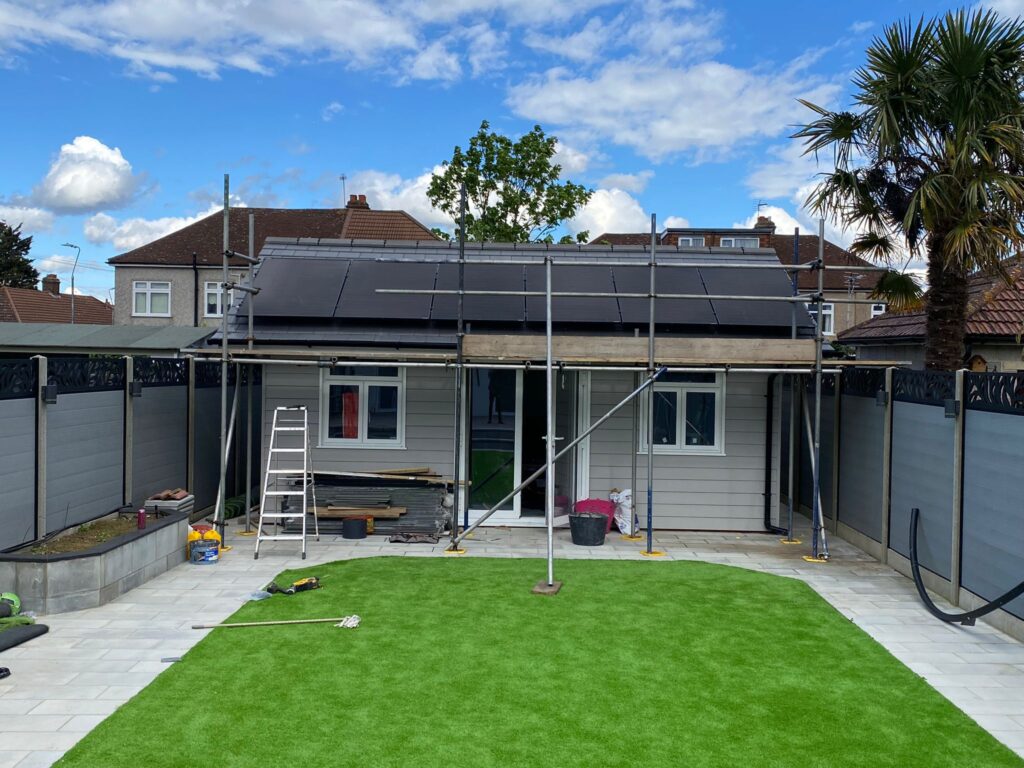
Stacking or scaling batteries isn’t just about having more power — it’s about gaining control over your energy usage.
With multiple batteries, you can store excess solar energy during the day and run your home almost entirely off stored power at night. Pairing solar panels in Dorchester with scalable batteries is one of the best ways to reduce reliance on the grid.
A single battery can keep essentials running, but multiple batteries mean full-home or full-business backup. This is particularly valuable in areas prone to power cuts.
Adding more batteries allows your system to grow with your needs. If you install a SunPower Maxeon 7 solar array today but expand your home or business energy usage later, you can add extra storage without starting from scratch.
While the upfront investment is higher, scaled systems pay off with reduced bills, protection against rising energy costs, and increased property value.
Most UK homes get by with one to three batteries, depending on household size and energy habits. For example, a family with electric vehicles and high evening usage may benefit from stacking several units.
Pairing these storage solutions with SunPower Maxeon 7 panels ensures maximum efficiency, thanks to their industry-leading output.
Commercial setups require much higher capacity. Restaurants, retail spaces, and offices can stack multiple high-capacity batteries, sometimes supported by custom energy management systems. The upfront investment is larger, but so are the long-term savings and resilience benefits.
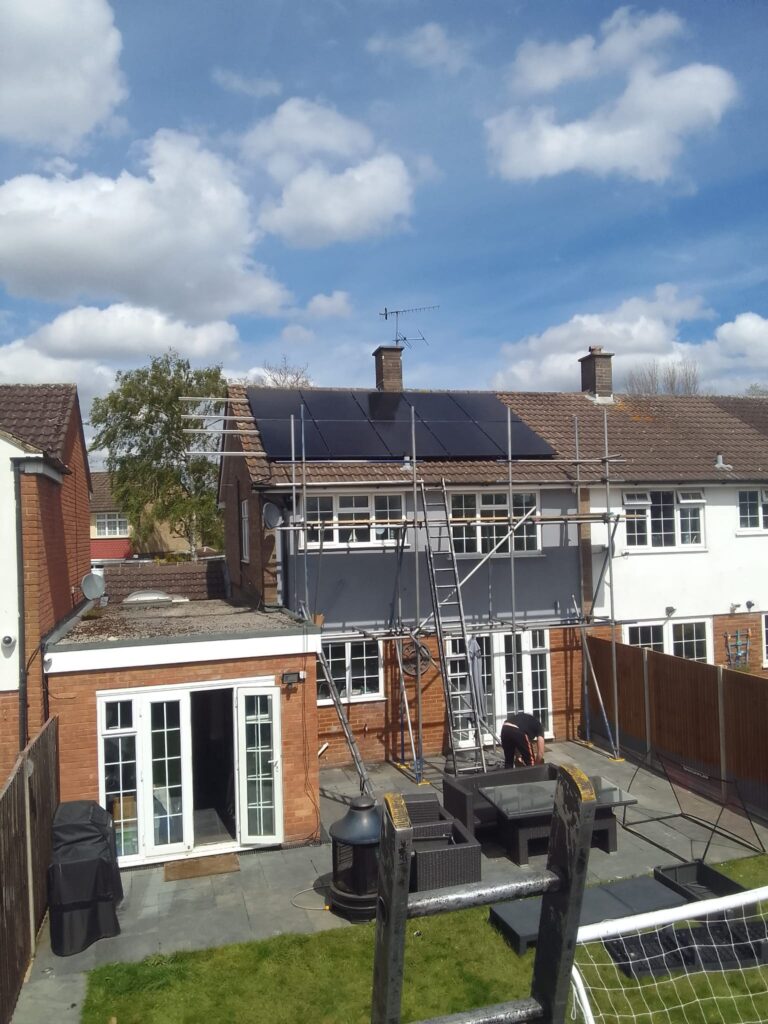
To help you decide which route to take, let’s look at some of the most discussed systems:
When paired with SunPower Maxeon 7 solar panels, any of these batteries can deliver exceptional performance — storing more energy and reducing grid dependence.
It’s not just about the batteries. High-output solar panels ensure you’re actually generating enough energy to fill those batteries. That’s where SunPower Maxeon 7 panels shine.
For residents searching for solar panels in Dorchester, pairing SunPower Maxeon 7 panels with a scalable storage solution like a Growatt battery or Tesla Powerwall is one of the smartest investments you can make.
So, how many battery units can be stacked or scaled? The answer depends on your chosen system — but the good news is that modern solutions make it easier than ever to expand. From a Growatt battery vs Tesla Powerwall comparison to exploring the flexibility of Panasonic EverVolt, there’s a solution for every budget and energy demand.
For those in Dorset, My Home Solar Dorchester is your go-to partner for expert guidance, installation, and ongoing support. Whether you’re interested in solar panels in Dorchester, premium SunPower Maxeon 7 technology, or a scalable battery solution, they’ll ensure your system is tailored to your needs.
Error: Contact form not found.